If you would like to be a guest on my podcast to share your take on the opportunity that ductless heat pumps offer today’s HVAC contractor, please drop me a note at info at dominateductless dot com or click here to send me a note through my contact page.
In this episode of the Dominate Ductless Podcast, we sit down with Bailey Parker, sales and training manager of One Choice Mechanical in Louisville, Kentucky, to explore how a young contractor’s journey from California back to the family business demonstrates the power of proper training, specialized processes, and the incredible earning potential in ductless heat pumps. Bailey’s story showcases how Nexstar training and systematic approaches can transform both individual performance and entire company operations.
[01:01] – Early HVAC Exposure: Bailey’s introduction to the trades at age 11, filing papers for $2.50/hour, then working as a tool holder with his dad at 14, developing his early work ethic.
[02:04] – Licensed at 18: Getting his journeyman license as a backup plan while pursuing a computer information systems degree with a cybersecurity focus.
[02:51] – UPS Leadership Track: Rapid promotion from ramp worker to supervisor to industrial engineer within 9 months, planning operations at UPS World Port facility.
[05:04] – Persistence Pays Off: Asking for a supervisor promotion every week for three months until getting the role—demonstrating the power of consistent follow-up.
[06:11] – California Career Decision: Choosing HVAC over computer work when California IT jobs only offered $25/hour versus $40/hour HVAC positions.
[07:36] – $1.2M Service Tech Performance: Achieving $1.2 million in sales as a service technician in his first year with Home Comfort USA through Nexstar training.
[10:36] – Family Business Calling: Returning to Kentucky to help transform his father’s struggling service department that had technicians barely hitting $100,000 annually.
[13:20] – California Partner Commitment: Santiago Morales following Bailey from California to Kentucky, bringing combined $2.5 million in annual production to the family business.
[15:05] – Change Management Strategy: Using patience and proven results rather than force to gain buy-in from existing team members and leadership.
[17:29] – Earning Respect: Six months of proving technical proficiency and consistency before father trusted Bailey to step into sales role.
[22:26] – Training Skepticism to Engagement: Initial reluctance about Dominate Ductless training quickly turning to full engagement after seeing the comprehensive business approach.
[24:46] – Marketing Education Impact: Learning about comprehensive marketing strategies, website optimization, and case study development for long-term business growth.
[33:04] – Revenue Growth Revelation: Understanding how adding 2-3 single-zone ductless systems weekly could generate an additional million dollars in annual revenue.
[36:03] – Standardization Success: Implementing specialized ductless crews and truck configurations for consistent, efficient installations.
[41:08] – Post-Training Results: Generating $40,000-$50,000 in additional ductless sales since training, including first 3-to-1 Mitsubishi hybrid system.
Bailey represents the future of our industry: young, educated, technically proficient, and business-minded. What strikes me most about his story is the courage it took to leave a $1.2 million producing position in Newport Beach to return to Kentucky and help transform his father’s struggling service department.
Here’s a 24-year-old who was living the California dream, making serious money as a service technician, and he walked away from it all because family came first. That level of character and commitment is rare in any generation, but especially impressive in someone so young. But Bailey didn’t just come home with good intentions, he brought systems, processes, and a proven methodology that immediately started producing results.
What I find most compelling about Bailey’s approach is his understanding that success isn’t about individual heroics—it’s about creating repeatable systems. His experience at UPS in industrial engineering, combined with his Nexstar training, gave him the tools to analyze processes and implement improvements systematically. When he talks about taking repair tickets from $250-$550 to $1,500-$2,000, that’s not sales manipulation, that’s proper diagnosis and comprehensive problem-solving.
Bailey also demonstrates the importance of specialization and buy-in. Rather than trying to force change, he and his partner Santiago simply executed their proven process and let the results speak for themselves. The “proof is in the pudding” approach builds credibility faster than any PowerPoint presentation ever could.
Invest in Proper Training: Bailey’s $1.2 million performance in California came from comprehensive Nexstar training that taught systematic customer care and selling processes.
Family Business Transition Requires Patience: Returning with new ideas and processes required six months of proving technical competency and consistency before earning leadership opportunities.
Process Documentation Drives Scalability: Standardized truck layouts, procedures, and systems enable consistent performance regardless of which team member executes the work.
Specialization Increases Profitability: Having dedicated ductless crews and equipment configurations improves efficiency and quality while reducing callbacks and complications.
Revenue Impact of Simple Math: Adding 2-3 single-zone ductless systems weekly can generate $500,000-$1 million in additional annual revenue with higher profit margins than traditional work.
Buy-In Through Results: Rather than forcing change, demonstrate success through proven processes and let performance speak for itself to gain organizational acceptance.
Marketing as Business Foundation: Understanding that marketing drives everything else in the business, from lead generation to customer education and long-term growth.
Continuous Learning Mindset: Success requires ongoing education, whether through manufacturer training, business courses, or learning from other successful operators.
Bailey’s journey from $1.2 million service tech to family business leader demonstrates how proper training, systematic processes, and commitment to excellence can transform both individual performance and entire company operations. His story proves that the next generation of HVAC professionals can combine technical expertise with business acumen to drive unprecedented growth in the ductless market.
Listen & Subscribe:
Listen to the full episode in the player above, or listen on your preferred podcast app.



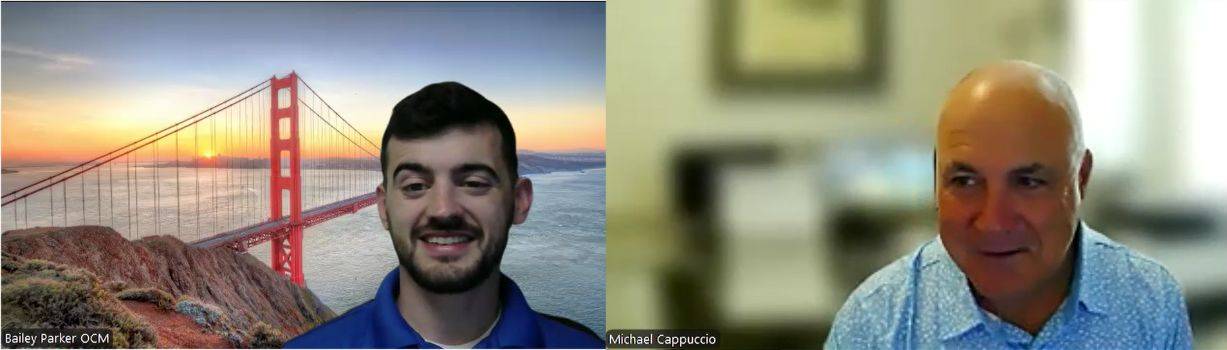
Mike: Welcome to the Dominate Ductless Podcast, where I tell the stories of entrepreneurs who are building businesses that are focused on ductless heat pumps. I’m Mike Cappuccio, the owner of Dominate Ductless, and I’m excited today to have a friend of mine who I met in Louisville, Kentucky, Bailey Parker. Bailey works for One Choice Mechanical—he works for his dad out there. Bailey, tell the audience a little bit about yourself, what you do, where you’re from, and your day-to-day role at One Choice.
Bailey: Thanks for having me on, Mike. My name is Bailey Parker. I work for One Choice Mechanical out of Louisville. I got my start in the trades when I was 11 years old. I started filing my parents’ files—they paid me $2.50 an hour. Just a little summer job, and it was when I first got my hunger for making money.
When I was 14, I started working in the field with my dad as a service technician, really just as a helper, being a tool holder. That’s when I started learning the tools, learning refrigerant, just learning some of the basics of the trades. When I was 16, he started sending me out with his installers, and I started installing equipment, mostly just traditional central air systems.
When I turned 18, I planned on going to college, but my dad always wanted us to make sure we had a fallback plan. So he had me and my brother go test for our journeyman license in Kentucky. I’ve been a licensed journeyman since the age of 18.
When I was 18, I got more into doing installs. I was also in college at the time—I went to school for computer information systems with a track in cybersecurity. While I wasn’t in school, I was usually working with my dad, just trying to make some extra money while I was in college.
Mike: You had a dual role for a while, it seems like.
Bailey: Absolutely. There was a portion in my junior year of college—I had to get more funding for college, so I began working at UPS. I worked on the ramp at UPS for a while, just moving boxes. After about three months, I moved up to being a supervisor. And then after six months of being a supervisor, they pushed me into the industrial engineering department at UPS.
Mike: That happened in six months?
Bailey: Within nine months, I started at UPS. Because of my degree, I needed a co-op, and my boss extended an offer to join the Industrial Engineering department. I actually helped plan the UPS World Port—their operation. Our whole job was to figure out how to make their operation more efficient. One of the simple problems we dealt with was planes leaving late, so they’d come back late. From Louisville to Alaska is a 12-hour flight, and we had to figure out how to make this plane on time and basically crunch a whole lot of data to figure it out.
After I finished at UPS and my co-op with them as an industrial engineer, I came back to work with my father as an install manager. After about a month of working in that role, he handed me a half-million-dollar project and told me to figure it out. Did a little bit of trial by fire there, but we got it done.
Mike: UPS saw something in you in the first three months. When people see your traits, they tend to move you up.
Bailey: That’s the thing. When people see those traits in you and they see that you’re a hard-working guy, typically that’s when people reach down and pull you up. I was persistent, Mike. I asked every week to become a supervisor since I started.
Mike: Every week?
Bailey: Every week for three months I would go up to my management team and say, “Hey, when is there an opening? When can I step into this role?” So every week for three months I asked and asked and asked until someone put me in the role.
Mike: You moved out to California a little bit after that, got away from the HVAC industry. What pulled you away from it?
Bailey: As a young man, I felt like I wanted to do something on my own, something that was different from my father. I wanted to have my own role, my own shoes to step into. I had this degree in computer information systems, and I wanted to explore it. I thought moving out to California and doing something different would be a good experience for me all around.
When I got out there, I was doing a little bit of data management for my dad on the side to make money while I got settled. I looked around for some jobs out there, and due to the limited amount of experience that I had, I was only going to be able to make $25 an hour starting out. In California, that’s not a lot of money to survive.
So I rewrote my resume for an HVAC resume. I saw some high-paying jobs, walked into a place, sat down, and they offered me $40 an hour starting out. From that point on, I was already in California and I needed to figure out a way to live, and HVAC was what took care of me.
Mike: What brought you back to Louisville, Kentucky?
Bailey: When I started working HVAC out there, I worked for a company called Home Comfort USA. That was where I got my first introduction into some form of sales skills, both as a service technician and starting to work with equipment. They sent me to Nexstar training and spent a lot of time on us, making us really great technicians, showing us how to take care of customers.
Your sales come from taking care of your customer. Being a good selling tech starts from how you take care of your customer and how you run your process and how you tune up their system. As I started to learn more and more with them, I did about $1.2 million in my first year in sales with them.
Mike: As a tech? $1.2 million in sales?
Bailey: Yes, sir.
Mike: I’m going to tell you something—I had home comfort advisors that couldn’t sell $1.2 million. That is a huge accomplishment. At $1.2 million with commission like that living in California, you’re doing pretty good.
Bailey: I was doing fine. I had no complaints whatsoever. And especially as a 24-year-old man who had never made that type of money, it was life changing. It also gave me a little glimpse of what I really could see in my life.
Mike: A lot of that came through Nexstar training?
Bailey: A lot of it. That’s the key word—it’s the buy-in. If you go to a place and open yourself up and unveil yourself to the program, and you allow yourself to buy in, then that’s where you really see real change and real growth in ourselves.
Mike: What brings you back to Kentucky? You’re living in Newport Beach, things are pretty darn good out there.
Bailey: That’s a good question because it was a hard choice. I was doing well in California, I’m 24 years old. Why leave? But the reason why I left was because my dad’s been doing HVAC for about 40 years. He’s had his company for 18 years, and quite frankly, he needed a little bit of help. His service team wasn’t producing what they needed to produce to support their side of the operation.
I thought, “Hey, I’ve got all this experience, I’ve learned all these things from the different trainings they’ve put me through. Why don’t you let me come back home and help train your guys and see if I can’t make them produce more for you?”
It was kind of a hard pitch for my father because he’s not always enough to want to change things. But we sat down and talked about it and came up with a plan together. Me and my good friend who I worked with at Home Comfort USA, Santiago Morales—he’s probably the best service technician I’ve ever worked with, extremely thorough, extremely thoughtful, and truly cares about the customer.
Mike: This is a California guy?
Bailey: Yes, this is a California guy. We lived together in California. I told him what I was doing—I was like, “Hey, I’m going to go home and help my family.” He looked at me and was like, “All right, I’m going with you.”
Mike: You’re talking to your father on the phone and getting deathly sick listening to him having technicians who can’t sell $100,000 and you’re selling $1.2 million.
Bailey: That’s exactly right. We had technicians here who were barely hitting $100,000 in a year, and that’s not enough to pay for a technician’s van. To me, that was an issue that needed to be corrected.
Mike: What’s your role when you come back?
Bailey: Initially, me and Santiago came back to Kentucky and our role was to just be service techs. Our role was to come back and train the service technicians that were currently here, show them our process, and try and build them up. But also to be service techs because me and Santiago were combining for about $2.5 million together a year.
Mike: What was your father like when this all happens? This is like all this stuff just dropped out of the cloud. In today’s world of HVAC, this stuff doesn’t happen—two rock stars don’t fall out of the sky.
Bailey: They usually don’t move from California back to Kentucky. But you do what you have to do to help your family, and that’s what’s most important at the end of the day, at least to me.
We started out as service technicians. Our biggest hurdle was that we knew a process that worked, we knew what needed to be done to make this happen throughout a service team. It was gaining the buy-in of the current service team from the people.
Mike: How did you get the people to buy in?
Bailey: It took a lot of patience. It took a lot of tough skin because even my dad supported us, but he didn’t necessarily have the buy-in either on what exactly we were doing because he’d never seen it. The way we got buy-in was—what I always say is the proof is in the pudding. Sometimes you got to make the pudding and get people to eat it before they’re going to buy in.
We came out here and just did what we do. We sold and we made a lot of money. We took care of people. We took their average repair tickets where they were typically seeing maybe $250 to $550 a repair ticket, and we just ran our process. We dove into the system, took great pictures of everything, showed the customers what they needed to do, and we took our repair tickets closer to $1,500 to $2,000.
We’re actually providing maintenance, we’re providing enhancements to our customers when they’re applicable. We’re allowing people to have the unique buying experience from us. We applied that to our customer base out here and showed these guys how to make more money—because who doesn’t like to make more money?
Mike: How did you get out of the technician seat to what you’re doing today?
Bailey: A lot of hard work. I had to gain the respect of my father. I left here, and my dad had an idea of me as his child. I’d done very well in California, but moving back here, my dad’s a technical master and he values that. Even though I was great at sales, gaining my dad’s respect had to come from proving to him that I could also be technically proficient, that I could be consistent, that I was going to show up.
I’d say after about 6-7 months of me being here, he really started to see that more. The current sales person that we had wasn’t that great—he didn’t take very good care of our customers. Once he left, I stepped into the role. I’d asked my father, expressed that I really wanted this role, and that I think I’d be able to do really good at it. He talked with the management team and they allowed me to step into this role. That was September of last year.
Mike: How did you get asked to come to the Dominate Ductless class?
Bailey: This may not be the answer you’re expecting, Mike. Trane has a lot of training that they push out, and we try to take advantage of as much of it as possible. It was February when we had the Dominate Ductless class. Our install department was a little wishy-washy, and I’d seen the training on my dispatch board. I went to my dad and was like, “Dad, do we really need to do this training? This is probably just another how-to-install ductless training.”
I hadn’t done any research on it, and my dad was like, “No, it’s supposed to be pretty good. You should go.” So I went into the training with the mindset of “Is this really going to be worth my time?” Then I walked into the room and Greg had opened up for you and he had good energy.
Mike: What are you thinking now? You’re sitting in this class.
Bailey: That’s kind of what I’m thinking in the back of my head, but there’s this other side of me that’s like, “I’m gonna get everything I can out of this, and I’m gonna approach this with an open mind because I’m here and I’m not being paid to be here, so I need to find a nugget.”
Then you started your opening spiel. I immediately heard the Boston accent, which for people who aren’t really from there, that’s slightly more entertaining. You had a strong presence about you, strong energy, which keeps you engaged. Anytime that I hear someone mention what they’ve done in their success story and it’s true and tangible, that piques my interest. The moment that I heard you talk about that, I was fully engaged. I was like, “If this guy is this successful, then I want to know everything he knows.”
Mike: What hits you? What are some of the high points that you really started to see?
Bailey: It’s the organization. When we sat down and you started going through that book—your textbooks, true textbooks. At first, I thought it was just another training manual. As you started going through it, you’re going through some of the marketing sections, the layout of how you lay things out. I think what really piqued my interest was how much you dug into just your marketing.
Mike: Marketing’s got to spin first.
Bailey: I wasn’t expecting that because what I realized was, “Oh, we’re in a business class.” You took the time to tell us everything that you had done in your business that worked from start to finish. What was most important, what was least important. It was like drinking out of a fire hydrant.
Mike: Don’t boil the ocean—let’s not boil the ocean today.
Bailey: That key phrase stuck with me. I’ve used that over and over again since your class. We’ll sit in a managers meeting and we’ll be trying to figure things out, and “Hey, don’t boil the ocean. What can we do right now? What are two key implementations that we can write?”
Mike: Two short term, two long term. Give me something I can fix in two days and give me something I can maybe fix over two months or two years.
Bailey: That whole approach reminded me of how my business coach used to say, “Take the thing that you don’t want to do the most first thing in the morning and get it done.” If it takes an hour or two hours, get it done, because then everything else will be easy for today.
Mike: When you look at marketing in your business, have you changed any of your marketing?
Bailey: We have a marketing manager, Jackson Paulin. He’s really good, extremely focused. A few things that we have been working to adjust—the iframe with the Mitsubishi portion that we’re building into the website. He’s working on getting all that put into the website so our customers are able to have a little bit of the Mitsubishi web app when they’re browsing through ductless systems on our website.
We’re also working on building a process for case studies, because one thing that I really liked from you was how many pages you had on your website and how much information you had, and how many hours of videos you had on YouTube. How you would make these case studies and use certain language that might link to your YouTube videos that would link to your website to try and draw the circle of traffic all back to your website.
One thing we’re working on—one of our two-month goals—is setting up a process for case studies where we take pictures of a customer’s house before, explain what the problem was and how we’re attacking it with what solution, and then give pictures of the equipment and changes that we’ve made to their house afterwards. I just felt like that was a really personal touch that you had.
Mike: If I asked you this question—two major highlights that you took away from that and said, “This is what I really learned today,” what were those things that you took away to go implement and help your business?
Bailey: The two major things—one created buy-in for me, and one showed process. First thing that really created buy-in for me—take it back a second, we’ve done ductless for a while, we’ve never been hyper-focused.
Mike: You were a dabbler. You were selling it as a service tech for hot and cold spots in homes, I know you would.
Bailey: It’s a whole lot easier to do that as a service tech sometimes than it is as a salesperson. Because you have a different perspective of the real home.
The first thing that gave me buy-in was you were showing us at what level, what amount of one-to-one sales would increase bottom line revenue for the year. If we did 2 or 3 one-to-one ductless sales a week additional to what we already do, we could drive an additional million dollars of revenue a year easily.
Mike: Two would probably give you a little over half a million. Three will probably give you about $800,000. Four will probably give you about $1.4 million somewhere in that range.
Bailey: Just the thought of the simplicity of those jobs, and if we can raise the frequency in which they occur, we can drastically drive a larger number in our revenue department.
The other part was when you were doing labor breakdowns and going through burden rates, you started to explain what your guys were producing per hour, what your trucks were producing per hour. A lot of us in the trades see a central air system with full duct systems going for $20,000-$30,000, and we all get excited because that’s a great sale. But how long does that take? Even if you have an all-star crew of three guys, that’s probably a 10-11 hour day. Whereas you broke down the dollar-per-hour amount when we start looking at these one-to-ones or even just two-to-one systems, because they can be done when you have a crew that specializes in this.
Mike: Big money in that, and specializing.
Bailey: That was one of the other key takeaways. At the end of day one, I went home and started reading your day two book because I wanted to know what was in it. I really looked through the whole damn book because I was so enthralled by it. What really caught my attention was your trucks—you had a picture of every portion, every different section of your truck, exactly where everything was laid out. Every part, every piece.
Mike: Every truck was set up the same.
Bailey: So that no matter who was working, if this truck went down, hop in this truck, it’s ready to go, hit the ground running.
Mike: Process and uniformity.
Bailey: That was one of the notes I had written down. Literally the organization and uniformity of the company, because when you’re describing them, when I was looking through your textbook and reading through that, to me that’s how you achieve scalability.
Mike: Organization is the key to success in business. If you can standardize something daily, it makes it so much easier across the board. I can just hand a manual to someone and say, “This is what I want in each section.” It just makes it so much easier than buying this van, that van, this van, that van. Good processes.
Bailey: What I saw a lot of that in college. Nexstar is all about the process. Home Comfort USA, all about the process. There is a process that they have that they know that works, and there’s no reason to deviate from it.
Mike: You might fine-tune it, you’re gonna tweak it, find your own route through that, but the base is going to stay the same.
Mike: In closing, if you were to recommend to contractors around the country about heat pumps and training, what would you tell them?
Bailey: I think two things. One, before you go head-first in, spend some time getting some real training. Honestly, your class—if you’re someone who’s trying to get into heat pumps or ductless heat pumps, that is a great place to start because of how detailed and organized you laid everything out for someone to get their feet wet and really dive in.
Getting into ductless, if you don’t know what you’re doing and you don’t have the right guys or the right processes, it’s going to cost you a lot of money and cause you a lot of problems. There’s nothing like going back on a ductless system that someone didn’t know how to tighten the nut down right, and instead of water leaking down the wall, you got refrigerant sprayed all over somebody.
I think it’s crucial, especially if we’re going to get into ductless—I know it’s hard for smaller companies to specialize employees because we rely on guys to wear multiple hats, but if we’re going to get into ductless, I think it’s crucial.
Mike: Have you defined a specialized crew in your company now?
Bailey: Yes, we have two guys that when we do ductless, those are our guys.
Mike: Have you sold more this year or since that training?
Bailey: Oh yeah. Right after your training, we had a home show, and everyone at the home show was interested in ductless. After your training, I sold my first three-to-one Mitsubishi hybrid system, and it was a beautiful system. We’ve probably done $40,000-$50,000 in ductless since the training. It’s substantial growth for us from last year to this year, so it’s a step in the right direction.
Mike: You’re going to continue to grow it, because once you sell it and believe in it, you’ll just keep doing more of it.
Bailey: It makes sense. There’s an application for it. It’s just being in the realm—that’s a whole market just in itself, how to add ductless heat pumps to central air conditioning systems and heating systems and make $1 million while you’re doing it and add a ton of profit to the job.
Mike: I’m so glad to hear that you got something out of the training. I’m going to have you back on the podcast in late fall, and you’re going to tell me where you’ve gone and what you’ve done.
Bailey: That sounds like a plan.
